
AI and Life · Essay
AI Can Do the Work. But Do We Want It To?
As AI takes on more of the work, we have to decide what is drudgery, what is craft, and what we still want to do ourselves.
By Dogu Taskiran
AI and Life · Essay
As AI takes on more of the work, we have to decide what is drudgery, what is craft, and what we still want to do ourselves.
Most conversations about AI and work begin with capability. What can AI do now? Which tasks can it automate? How much faster can we work, and how many hours can we save?
There is an understandable assumption underneath those questions: if a machine becomes capable of doing a task, eventually we should probably let it.
I am not sure that follows.
In Bertrand Russell's 1932 essay *In Praise of Idleness*, he argued against treating work as an inherent moral virtue. If technology can reduce the amount of labor required to produce what people need, why should we keep people working simply because work itself has become a measure of virtue?
AI makes a modern version of that question hard to avoid. It is no longer only factory work or routine administration that can be automated. AI can write, design, research, code, analyze and create. Activities that many of us spent years learning can suddenly become optional.
Often that feels liberating. Sometimes it does not.
I have spent much of my life making software and other digital things. There are tasks AI now does for me that I am delighted never to do manually again. There are others that I miss. They were inefficient, certainly, but they were also enjoyable. They gave me the satisfaction of understanding a problem and making something work.
I see the same tension in engineers around me. If you spent twenty years becoming good at writing software, being told that much of the implementation can now be generated for you does not necessarily feel like freedom from tedious work. Part of the craft may have just moved away from you.
At the same time, AI has made me notice how much work I used to do simply because there was no other way to get to the result. Searching, formatting, moving information between tools, producing another variation of something I had already decided, or turning a reasonably clear thought into whatever form the next system required. I sometimes enjoyed those things too, but enjoyment and necessity had become mixed together.
AI is starting to separate them.
This is why I do not find the usual distinction between "creative work" and "drudgery" very useful. The same task can be an irritating intermediate step for one person and the reason another person chose the profession in the first place.
Designing a social media banner may be overhead for someone running an online store. For a graphic designer, making that banner may be the interesting part. A founder may want to go from an idea to working software with as little friction as possible. A programmer may find meaning in exactly the implementation work the founder would happily automate.
Writing is similar. One person may care primarily about developing an argument and be comfortable using AI to organize, challenge and help express it. Another writer may discover what they think by finding the sentences themselves. Asking AI to write those sentences could remove the part of the process they value most.
The task alone does not tell us what should be automated. The person, the purpose and the project matter too.
That makes human-centered AI more complicated than simply protecting "creative" tasks for humans while handing repetitive ones to machines. We do not agree on which tasks belong in which category, and even our own answers can change over time.
I have already had moments when I missed doing something myself and, a few weeks later, realized I did not actually want the task back. I missed the feeling of competence or ownership around it. Once I separated that feeling from the repetitive work surrounding it, the boundary moved again.
There is another side to this problem. As I wrote in I'm Trying to Build Myself Out of the Loop, automation often leaves a person sitting somewhere between systems. One tool produces something, the person checks it, another system processes it, and the person approves the result.
Sometimes the person is there for a good reason. The decision requires judgment. The consequences matter. A relationship or promise is involved. Someone needs to understand the situation and remain responsible for what happens.
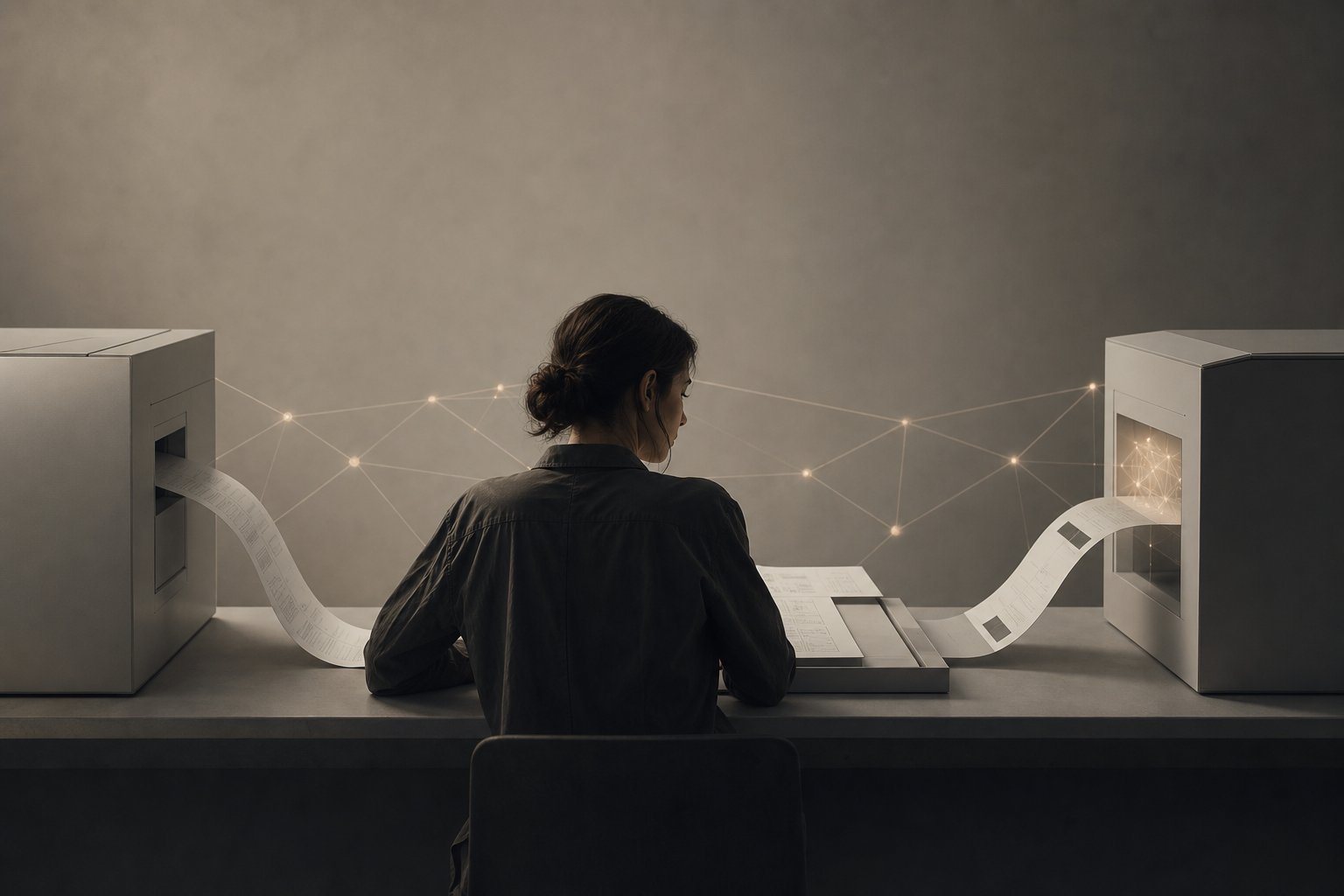
Sometimes the person is there because the system is incomplete. They move information between tools, check predictable cases, carry context that was never captured properly, or connect two pieces of software that cannot yet work together on their own.
We often call both situations "human in the loop," but they are not equivalent. Keeping a person involved does not automatically make a system more human. If someone's role is effectively to act as connective tissue between machines, we may simply have created a new form of administrative work.
The opposite mistake is to automate everything that can technically be automated. Some friction is waste, but some friction is how we learn. Some of it is practice. Some of it creates professional identity and ownership. Some of it is simply the pleasure of making something ourselves.
The hard part is knowing which is which.
You can see this tension clearly in creative work. Games are one example I know well. AI can remove a large amount of production work and allow small teams to attempt things that once required far more people, time and money. I find that possibility genuinely exciting.
At the same time, some players care deeply about who made a game. They follow particular creators and studios, and the people behind the work are part of what gives it value. That does not mean the game needs to be made without AI. It means authorship can remain relevant even when the tools change dramatically.
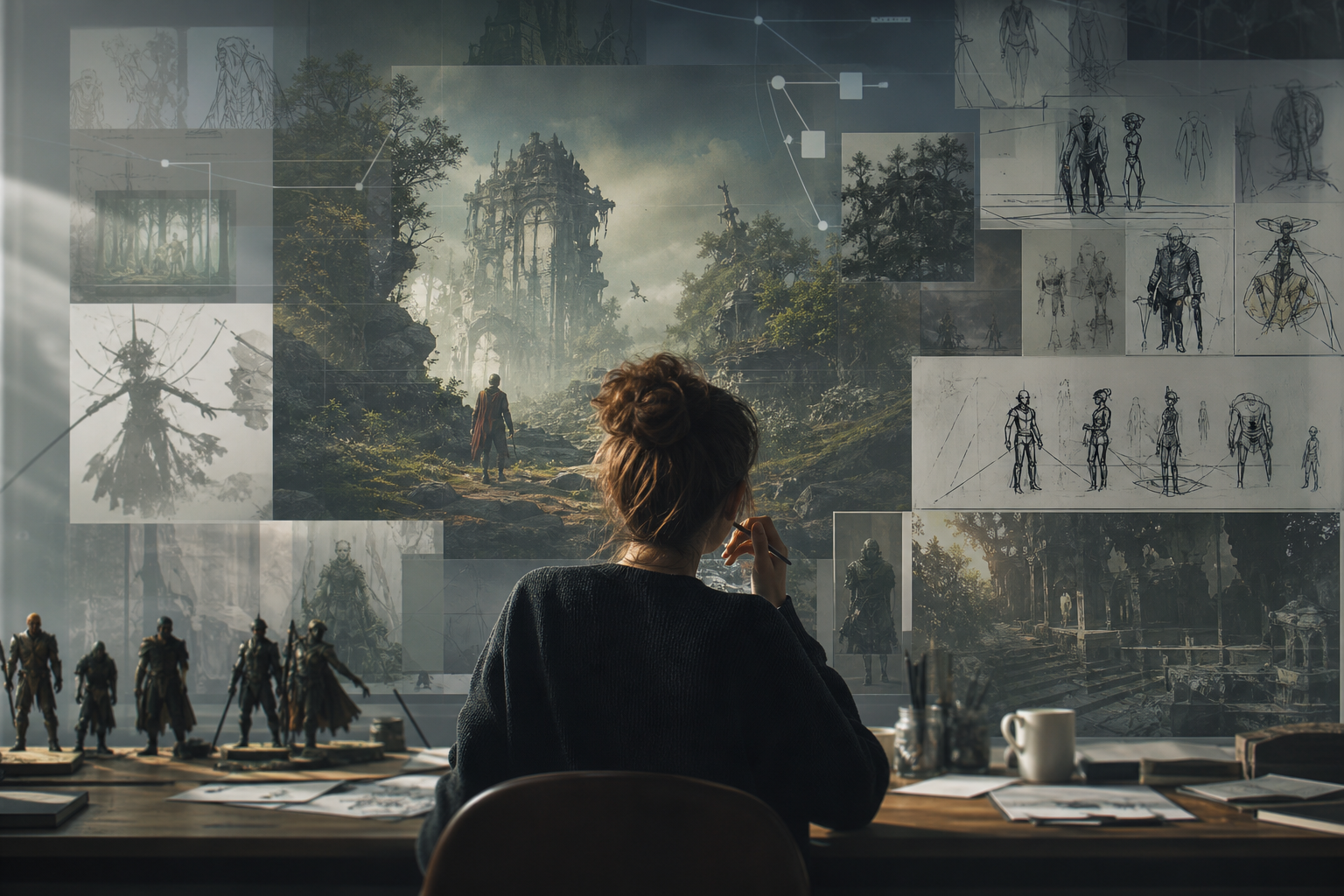
I think the same will be true in other fields. "Human-made" cannot simply come to mean "no AI was used." That definition will become less useful as AI finds its way into writing, design, software, film, research and almost every other form of production.
A piece of work can use AI extensively and still reflect the judgment, taste and intentions of a person. Another process can contain humans at every approval step while giving them almost no meaningful role at all.
This article is a useful example.
I am writing it with AI. I have used AI throughout the process to discuss the idea, test different framings, organize thoughts and produce drafts. I have rejected versions, changed the argument, removed language that did not sound like me and changed what I wanted to say as the conversation developed.
For me, manually typing every sentence is not the part of writing I am trying to protect here. I care about developing the idea, deciding what I believe, choosing what belongs in the argument and being willing to put my name on the result.
Another writer may draw that line somewhere completely different. I do not think one of us has to be the rule for everyone.
I have been using a phrase in some of the short videos I make: AI works, I live.
I do not mean that I want to stop doing things while machines take over my life. For me it means almost the opposite. I want AI to become more like infrastructure in the background, handling more of the work I do not need to be personally carrying while I spend my attention on the things I actually chose to do.
That may still mean working very hard. It may mean starting another company, developing an idea, making something, spending time with people I care about or doing something with no productive purpose at all. The point is not less activity. It is more agency over where my attention goes.
This connects to the question I asked in What Happens to the Time AI Saves?. AI can create capacity, but capacity does not decide its own destination. The same is true one level deeper. AI can make a piece of work optional, but optional does not tell us whether we wanted to stop doing it.
That choice will not always be ours. Jobs, employers, economics and technology will all shape what remains available to people. Craft itself will change as tools change, just as it has before. There is no reason to assume that the way we learned to make things is the only authentic way to make them.
But where we do have a choice, I think it is worth being more deliberate than "automate whatever can be automated."
When AI makes one of your tasks optional, there is a useful question to ask before handing it over completely: was I doing this only because it had to happen before I could reach the result, or was doing it part of the result for me?
AI is going to make more and more work optional. We should not assume that means we want all of it gone.
Continue the conversation
Essays and field notes on AI, systems, work, building and life.